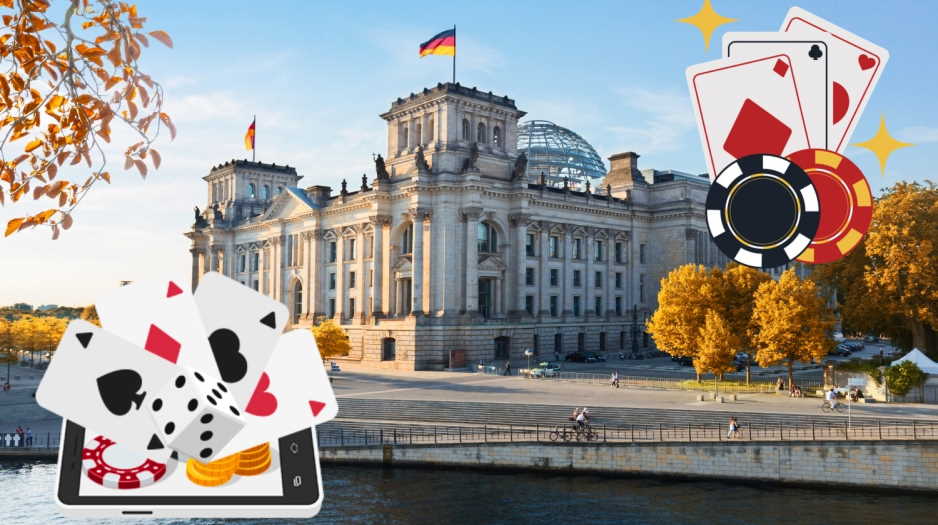
Germany’s Patchwork Casino Laws Create Wild West Scenarios
The Great German Gaming Divide: When 16 States Can’t Agree
Germany’s online casino landscape resembles a complex jigsaw puzzle where no two pieces quite fit together. While the Interstate Treaty on Gambling (Glücksspielstaatsvertrag) of 2021 was supposed to unify regulations across all 16 federal states, the reality is far messier. Each Bundesland maintains significant autonomy over implementation, creating a regulatory patchwork that would make even seasoned compliance officers dizzy.
The numbers tell a striking story: as of early 2026, only 12 of Germany’s 16 states have fully harmonized their local gambling laws with federal guidelines. Bavaria and Saxony continue to operate under stricter interpretations, while Hamburg and Berlin have adopted more liberal approaches to certain gaming categories. This fragmentation has created what industry experts call ‘regulatory arbitrage’ – where operators and players gravitate toward the most favorable jurisdictions.
For lottery and bingo enthusiasts, this means wildly different experiences depending on your postcode. While traditional lottery games remain largely uniform thanks to the Deutscher Lotto- und Totoblock’s national coordination, online bingo operations face a maze of conflicting requirements. Some states require additional player verification steps, others impose stricter deposit limits, and a few have banned certain promotional mechanics entirely.
Bavaria’s Iron Fist Approach Versus Berlin’s Open Arms
Bavaria stands out as Germany’s most restrictive gambling jurisdiction, maintaining what locals call the ‘Bavarian Exception.’ The state requires all online casino operators to obtain separate licensing even when they hold valid federal permits. This has created a situation where platforms like National Casino login must navigate additional compliance layers when serving Bavarian residents, including enhanced age verification and mandatory cooling-off periods.
The contrast with Berlin couldn’t be starker. The capital city has embraced what regulators term ‘progressive compliance,’ allowing operators more flexibility in implementing responsible gambling measures. Berlin’s approach focuses on outcome-based regulation rather than prescriptive rules, meaning operators can choose how to meet player protection goals rather than following rigid protocols.
“We’re seeing a clear north-south divide in regulatory philosophy,” explains Dr. Petra Hoffmann, gambling law specialist at Frankfurt University. “Northern states like Schleswig-Holstein and Hamburg are treating online gambling as a consumer product that needs smart regulation, while southern states like Bavaria view it more as a social risk requiring strict containment.”
This philosophical split has real consequences. A recent study by the German Gaming Association found that Bavarian players are 34% more likely to use unlicensed offshore sites compared to Berlin residents, suggesting that overly restrictive local rules may actually undermine player protection goals.
The Schleswig-Holstein Wild Card That Changed Everything
Schleswig-Holstein deserves special mention as Germany’s gambling pioneer. The northern state operated under its own licensing regime from 2012 to 2021, creating what many consider the template for Germany’s current federal system. During this period, Schleswig-Holstein issued over 50 online gambling licenses, establishing precedents that still influence regulatory decisions today.
The state’s early adoption of comprehensive online gambling regulation gave it unique insights into practical implementation challenges. Unlike other states that are still learning, Schleswig-Holstein’s regulators have nearly a decade of enforcement experience. This shows in their nuanced approach to emerging technologies like blockchain-based gaming and cryptocurrency payments.
Current data shows Schleswig-Holstein processes gambling license applications 40% faster than the federal average, largely due to their experienced regulatory infrastructure. The state has also pioneered innovative approaches to cross-border enforcement, working directly with operators in Malta and Gibraltar to ensure German player protections are maintained.
Cryptocurrency Chaos: When Digital Money Meets German Bureaucracy
Perhaps nowhere is Germany’s regulatory fragmentation more apparent than in cryptocurrency gambling policies. While the federal framework acknowledges digital currencies, individual states have taken dramatically different approaches to crypto-based gaming operations.
Hesse and North Rhine-Westphalia have embraced comprehensive cryptocurrency frameworks, allowing licensed operators to accept Bitcoin, Ethereum, and other major cryptocurrencies with proper anti-money laundering controls. Meanwhile, Baden-Württemberg has effectively banned crypto gambling by requiring all transactions to flow through traditional banking channels.
The implications extend beyond simple payment processing. States with crypto-friendly policies are seeing increased interest from international operators looking to serve the growing German market. Hamburg, for instance, has attracted three major blockchain-based lottery platforms in 2026 alone, generating significant licensing revenue while expanding player choice.
“Cryptocurrency represents the future of cross-border gambling,” notes Marcus Weber, senior analyst at Berlin-based gaming consultancy Spiel Analytics. “States that embrace it now will have competitive advantages for years to come, while those that resist risk becoming regulatory backwaters.”
Enforcement Inconsistencies Create Compliance Nightmares
The enforcement landscape across German states resembles a regulatory lottery in itself. Some jurisdictions have invested heavily in sophisticated monitoring systems that track everything from session lengths to betting patterns, while others rely on basic compliance reporting from operators.
Brandenburg leads in enforcement technology, utilizing AI-powered systems that can identify problem gambling patterns in real-time across multiple platforms. The state’s approach has reduced gambling-related complaints by 28% since implementation in late 2025. Contrast this with Mecklenburg-Vorpommern, which still relies primarily on annual operator audits and player complaints for enforcement.
These disparities create significant challenges for multi-state operators. A single platform might face automated monitoring in Brandenburg, manual audits in Bavaria, and self-reporting requirements in Saxony-Anhalt – all for the same basic gaming services. The compliance costs alone have driven several smaller operators to focus on single-state markets rather than pursuing national coverage.
The situation becomes even more complex when considering cross-border enforcement. When a Hamburg resident plays on a platform licensed in Schleswig-Holstein while physically located in Bavaria, which state’s rules apply? Current jurisprudence suggests all three jurisdictions could potentially claim regulatory authority, creating a legal maze that even experienced gaming lawyers struggle to navigate.
Player Protection Paradoxes Across State Lines
Germany’s fragmented approach has created fascinating paradoxes in player protection. While all states ostensibly share the same goal of preventing problem gambling, their methods vary so dramatically that moving between states can completely change a player’s gaming experience.
Take deposit limits as an example. The federal framework suggests monthly limits of €1,000 for most players, but implementation varies wildly. Bavaria enforces strict €500 monthly caps with no exceptions, while Berlin allows operators to set higher limits for players who pass enhanced financial verification. Rhineland-Palatinate has pioneered dynamic limits that adjust based on player behavior patterns, while Thuringia maintains the basic federal minimums.
Session time limits present another area of divergence. Some states require mandatory 30-minute breaks after two hours of play, others implement graduated warning systems, and a few rely entirely on player self-control tools. The result is a system where crossing state boundaries can dramatically alter your gambling experience – not exactly the seamless national market the Interstate Treaty was supposed to create.
Recent player surveys reveal the confusion these inconsistencies create. Nearly 60% of German gamblers are unaware that rules change between states, and 23% have unknowingly violated local regulations while traveling. This ignorance isn’t just inconvenient – it can lead to account suspensions, forfeited winnings, and regulatory penalties that vary dramatically depending on which state discovers the violation.
The Economic Impact of Regulatory Fragmentation
Germany’s patchwork gambling regulations aren’t just creating compliance headaches – they’re reshaping the country’s economic geography in unexpected ways. States with more liberal gambling policies are attracting significant investment and employment, while restrictive jurisdictions risk being left behind in the digital economy transition.
The numbers are striking: Hamburg has seen gambling-related employment increase by 45% since adopting crypto-friendly policies in 2025, while Bavaria’s gaming sector has contracted by 12% over the same period. This isn’t just about direct gambling jobs – the ecosystem includes software developers, compliance specialists, customer service operations, and financial services providers.
Tax revenue disparities tell a similar story. States that have embraced comprehensive online gambling frameworks are generating substantial licensing fees and tax revenues that more restrictive jurisdictions are missing out on. Berlin collected €89 million in gambling-related taxes in 2025, compared to just €34 million in similarly-sized Munich, largely due to different regulatory approaches attracting or repelling operators.
The ripple effects extend to related industries. States with thriving gambling sectors are seeing increased demand for legal services, accounting firms, and technology companies specializing in compliance solutions. This creates positive economic cycles where gambling-friendly policies attract investment that generates broader economic benefits.
Looking Ahead: Convergence or Continued Chaos?
As we move through 2026, the question isn’t whether Germany’s gambling regulations will eventually converge – it’s whether that convergence will happen through federal mandate or market pressure. Current trends suggest both forces are at work, but pulling in different directions.
The federal government has hinted at more prescriptive national standards, particularly around cryptocurrency and cross-border enforcement. However, states that have invested heavily in their own regulatory infrastructure are unlikely to abandon systems that are generating significant economic benefits. This tension between federal coordination and state autonomy will likely define German gambling regulation for years to come.
Market forces are already driving some convergence. Operators are increasingly focusing on states with clear, stable regulatory frameworks rather than trying to navigate the most complex jurisdictions. This is creating competitive pressure on restrictive states to modernize their approaches or risk losing investment and tax revenue to more progressive neighbors.
The ultimate irony may be that Germany’s fragmented approach, while creating short-term confusion, could produce superior long-term outcomes. Different states are essentially running regulatory experiments, allowing the country to identify best practices through real-world testing rather than theoretical modeling. The challenge will be learning from these experiments and implementing successful approaches more broadly before the competitive disparities become too entrenched to reverse.